Ecosystem Update June 2026
We are excited to bring you the June 2026 Ecosystem Update, covering the latest developments across the macro environment, market performance, the broader industry landscape, and Advanced Blockchain's ecosystem.
Macro Overview
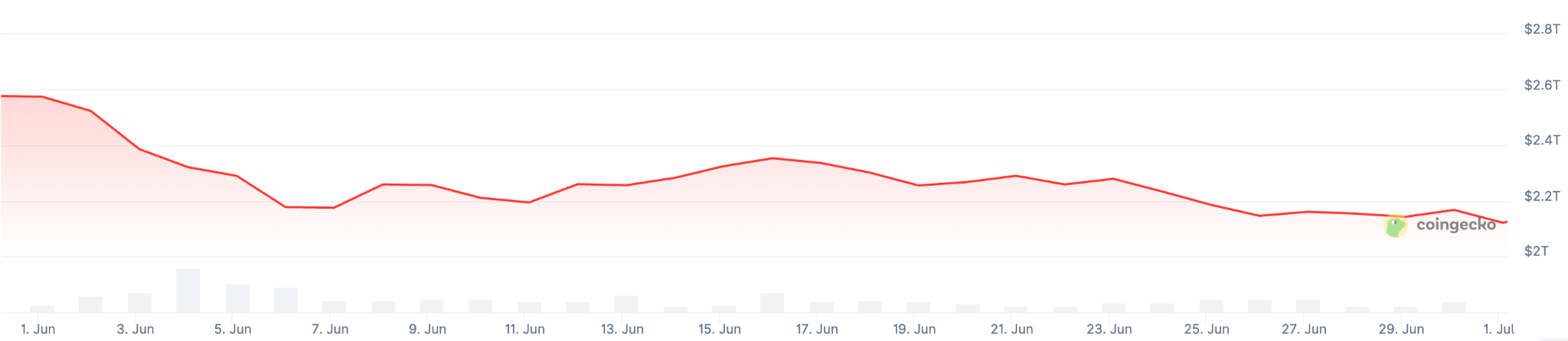
The June chart tells a story of two distinct phases. The market opened the month around $2.6 trillion, still near May's closing levels, but fell sharply in the first week, shedding roughly $400 billion to touch approximately $2.15 trillion around June 6-7. This opening collapse aligns directly with the intensification of Bitcoin ETF outflows: the 13-day consecutive outflow streak running from mid-May into early June reached its peak momentum in this window, with institutional redemptions accelerating as Treasury yields rose and AI equities competed for capital.
From around June 8 through mid-month, the market staged a partial recovery, stabilizing in the $2.2-2.35 trillion range. However, the recovery lacked conviction: ETF outflows continued, and the structural uncertainty around the CLARITY Act's stalled Senate progress provided no fresh catalyst.
The final week of June brought a second leg down, with the market sliding from around $2.3 trillion to close just above $2.05 trillion by July 1. This deterioration coincides with Binance's June 24 announcement of EU service suspension ahead of the MiCA deadline, a development that removed one of the market's largest liquidity providers from Europe, combined with continued institutional selling and the general risk-off tone that characterized the month's close.
The sustained price weakness is beginning to filter through to the private markets in a meaningful way, and the signals from the venture capital side. Crypto startups raised approximately $8.5 billion across 385 disclosed funding rounds in the first half of 2026, compared to $34.9 billion across 1,646 rounds throughout all of 2025, representing a roughly 75% decline in both deal count and total capital deployed. The consequences are becoming visible in project attrition: over 70 crypto projects closed in the first half of 2026, including three a16z-backed ventures that collectively had raised $87 million. The capital that remains active is concentrating in a narrow set of categories such as stablecoins, payment infrastructure, tokenization, and institutional trading services, while consumer applications, gaming, and early-stage protocols are largely being passed over. Investors now require demonstrated revenue, clear regulatory standing, and proven product-market fit before committing, a bar that most early-stage crypto companies cannot currently clear.
A Painful Correction: Bitcoin and the Institutional Retreat
June 2026 marked the steepest monthly decline for Bitcoin since June 2022, with the asset falling approximately 20% over the month from around $71,000 to close near $59,100. The slide was led by sustained institutional selling through ETF vehicles. US spot Bitcoin ETFs recorded $4.5 billion in net outflows for the month, the worst monthly figure since their January 2024 launch, including a 13-day consecutive outflow streak between mid-May and early June that alone accounted for $4.33 billion. A single-day peak outflow of $696.3 million was registered during the streak. BlackRock's IBIT, the dominant product in the category with a 48.5% market share, accounted for close to 79% of total category redemptions. The selling was broadly rational rather than panicked. Many institutional positions had been built in the $52,000-$58,000 range during Q1 2026, and a repricing of US Treasury yields changed the opportunity-cost calculus for non-yielding assets.
Adding to the sentiment shift, Strategy Inc (formerly MicroStrategy) disclosed in a June 1 filing that it had sold 32 BTC for approximately $2.5 million in late May, its first Bitcoin sale since December 2022. While the amount was negligible relative to its 843,706 BTC treasury, the disclosure was symbolically significant: Strategy had been the flagship example of corporate Bitcoin accumulation, and any deviation from that posture attracted outsized market attention. The sale was made to fund a dividend payment on its preferred stock, not a strategic reversal.
MiCA Deadline Reshapes the European Crypto Landscape
The July 1 MiCA authorization deadline dominated European crypto news throughout June and resulted in the most significant structural change to the EU crypto market since the regulation came into force. ESMA confirmed that no extension would be granted, and the final clearance figures were stark: of more than 3,000 virtual asset service providers registered across EU member states under pre-MiCA national frameworks, only approximately 210 received full MiCA CASP authorization by the deadline, a clearance rate of roughly 7%. Poland alone had accounted for over 1,400 of the pre-MiCA registrations, most of which will now cease EU operations.
The most consequential casualty was Binance, the world's largest crypto exchange by volume. On June 24, Binance withdrew its MiCA license application filed with Greece's Hellenic Capital Market Commission and announced it would suspend most services for EU residents from July 1, halting new orders, deposits, sign-ups, and staking products. Binance said user assets remain safe and accessible as it winds down unlicensed EU operations. The exchange stated it intends to seek authorization in France, though French authorities have an ongoing investigation into the company. The firms that successfully secured MiCA authorization include Coinbase, Kraken, OKX, Bybit, Gemini, and Crypto.com, positioning them to absorb a significant share of displaced European user volumes.
US Legislation: Progress Stalls but Regulatory Framework Deepens
Progress on the GENIUS Act's implementing rules was more concrete. On June 18, FinCEN, the OCC, the Federal Reserve, the FDIC, and the NCUA jointly issued a notice of proposed rulemaking establishing customer identification program requirements for permitted payment stablecoin issuers, one of the final regulatory building blocks before the Act's implementation framework is complete. Comment periods across the six agency rulemaking tracks closed by June 9, and the agencies now face a July 18 deadline to finalize rules. Full implementation of the GENIUS Act's requirements for issuers is expected to begin no later than January 2027.
On June 30, SEC Chairman Paul Atkins publicly outlined "Project Crypto" as the agency's cornerstone initiative to bring long-awaited regulatory clarity to digital assets, positioning it as a shift from enforcement-led regulation toward written rules that issuers can consult before launch. The initiative builds on the joint SEC-CFTC digital commodity taxonomy rolled out in March and signals that the SEC intends to remain active in the regulatory landscape even as the CLARITY Act defines the outer boundaries of its jurisdiction.
Wall Street Doubles Down on Blockchain Infrastructure
Despite the market downturn, June brought one of the most significant institutional blockchain announcements of the year. On June 5, JPMorgan Chase, Citigroup, Bank of America, Wells Fargo, BNY, and HSBC announced plans to develop a shared tokenized deposit network targeting a launch in the first half of 2027. The network, to be operated by The Clearing House, will enable tokenized deposits to move instantly between participating institutions and support 24/7 settlement, effectively putting bank money on blockchain rails. The initiative represents the most coordinated competitive response from Wall Street to the growing stablecoin market, which has encroached on traditional banking's role in payments, settlement, and cash management.
Group Update
On 30th June, 2026, we published our audited financial statements, both for Advanced Blockchain AG as well as for Incredulous Labs.
During the 2025 financial year, Advanced Blockchain AG’s primary focus was on stabilising and professionalising the group, as well as on the comprehensive processing of historical matters required by law – in particular in connection with its subsidiary Incredulous Labs Ltd. A further key priority in the 2025 financial year was the strengthening of internal governance, control and compliance structures. Through various organisational measures, processes were made more transparent, efficient and resilient. The aim of these measures was to strengthen the Company organisationally and to reinforce capital market confidence on a sustainable basis.
Advanced Blockchain AG increased its revenue in the 2025 financial year from EUR 0.23 million to EUR 0.31 million. However, the net result for the year was materially burdened by further valuation adjustments, in particular write-downs totalling EUR 1.5 million on receivables due from Incredulous Labs Ltd. and nakamo.to GmbH . This was primarily attributable to the negative performance of the token portfolio at the level of Incredulous Labs Ltd. Additional pressure on earnings came from increased legal and advisory expenses incurred in connection with the review of historical matters. As a result, the operational stabilisation and improved transparency were accompanied by a noticeable impact on earnings. Accordingly, the net loss for 2025 amounted to EUR 3.48 million, compared with a net loss of EUR 1.78 million in the previous year. Further pressure on earnings arose from increased legal and advisory expenses incurred in connection with the review of historical matters.
The historical matters led to a qualified audit opinion in the 2025 financial year for both Advanced Blockchain AG and its subsidiary Incredulous Labs Ltd. At the same time, the uncertainties relating to the 2023 and 2024 financial statements of Incredulous Labs Ltd were resolved in the 2025 financial statements, thereby avoiding a renewed disclaimer of opinion.
We strongly believe that this, unfortunately long-lasting, but definitely necessary clean-up process sets the basis for a complete restart. “Everything is now on the plate”.
The company plans now for the AGM, which will be held on 27th August 2026.
Portfolio Update

XMAQUINA - XMAQUINA team published research reports on top robotics companies and public market opportunities, including detailed coverage of Apptronik’s Apollo 2 humanoid (with Google DeepMind partnership) and updates on portfolio holdings such as Figure AI and Agility Robotics. They also released the Humanoid Digest: June 2026, highlighting industry progress in production scaling and deployments.
The DAO remained active with governance and continued educating the community on the humanoid robotics investment thesis.
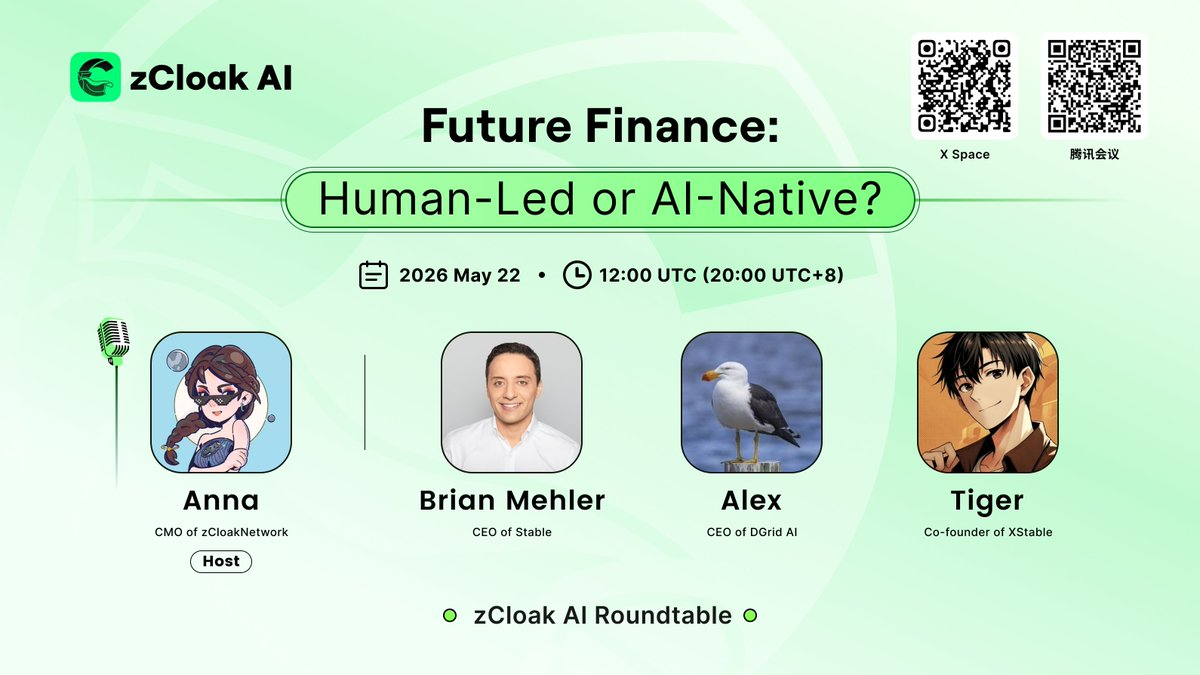
zCloak Network - zCloak Network team participated in major events such as the Unique Bloom 2026 SG AI Summit in Singapore, where they discussed enterprise AI adoption, trust, compliance, and moving AI agents into real business workflows. They continued promoting their Enterprise Digital Employees and privacy-first infrastructure for dependable AI.
Zcloak team in June focused on industry engagement and positioning their Agent Trust Protocol (ATP) for enterprise use cases.
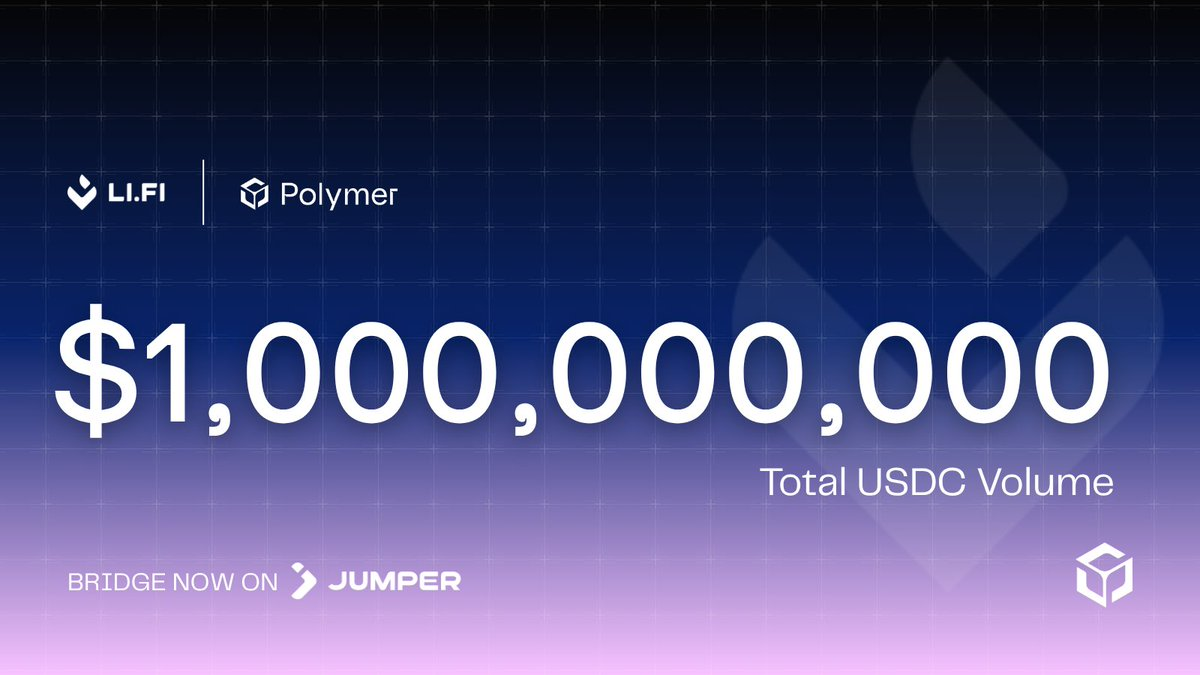
Polymer - June 2026 was another active month for Polymer. They crossed $1 Billion in total USDC volume on their zero-slippage CCTP bridge (powered with LI.FI and Jumper). They also expanded support to new chains, including Cronos, enabling fast and precise cross-chain transfers across 16+ major networks.
Even in slower market conditions, Polymer highlighted consistent volume and strong fundamentals for large transfers.

Panoptic - The Panoptic team launched Panoptic V2 and introduced the Panoptic Vault Suite, including the Unicorn Vault and PLP Vault. These allow users to earn yield through automated, market-neutral strategies combining lending, market making, and volatility harvesting without active trading. They also published supporting research and backtests while expanding onchain options capabilities for RWAs and structured yield.
Overall, June marked a notable step forward in turning onchain options into accessible DeFi yield infrastructure.

Peaq - The Peaq network announced a key partnership with Arcium to bring confidential compute to robots and machines running peaqOS. This enables machines to process sensitive data privately without exposing raw information, with verifiable results. Peaq also continued the strong support for the Machine Economy, including ecosystem integrations and community campaigns around XMAQUINA. Furthermore,The team advanced privacy-preserving infrastructure and real-world utility for autonomous machines.
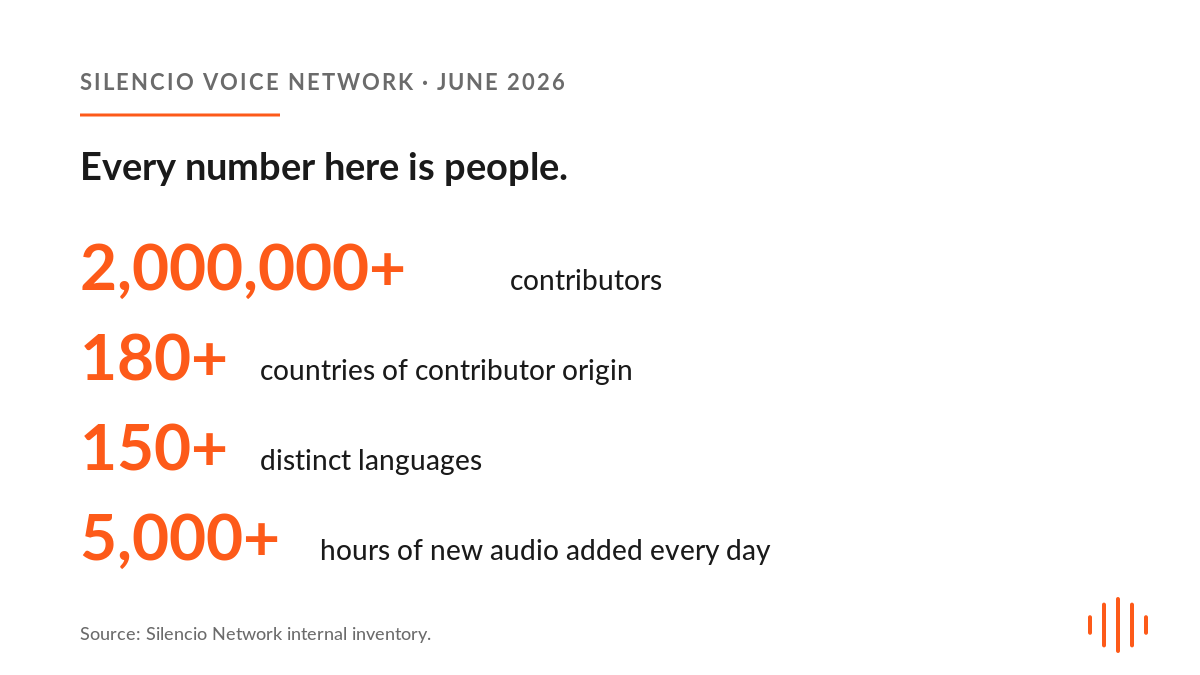
Silencio - The team continued delivering payouts to contributors, executed token burns, and emphasized the importance of real-world multilingual voice data for advanced AI. They published educational content on challenges like code-switching languages and endangered languages, while highlighting their 2.5M+ contributor network.
Silencio team also published their MiCA crypto-asset whitepaper to support regulatory clarity. Silencio has published its B1 Token Transparency Filing with Blockworks this month.
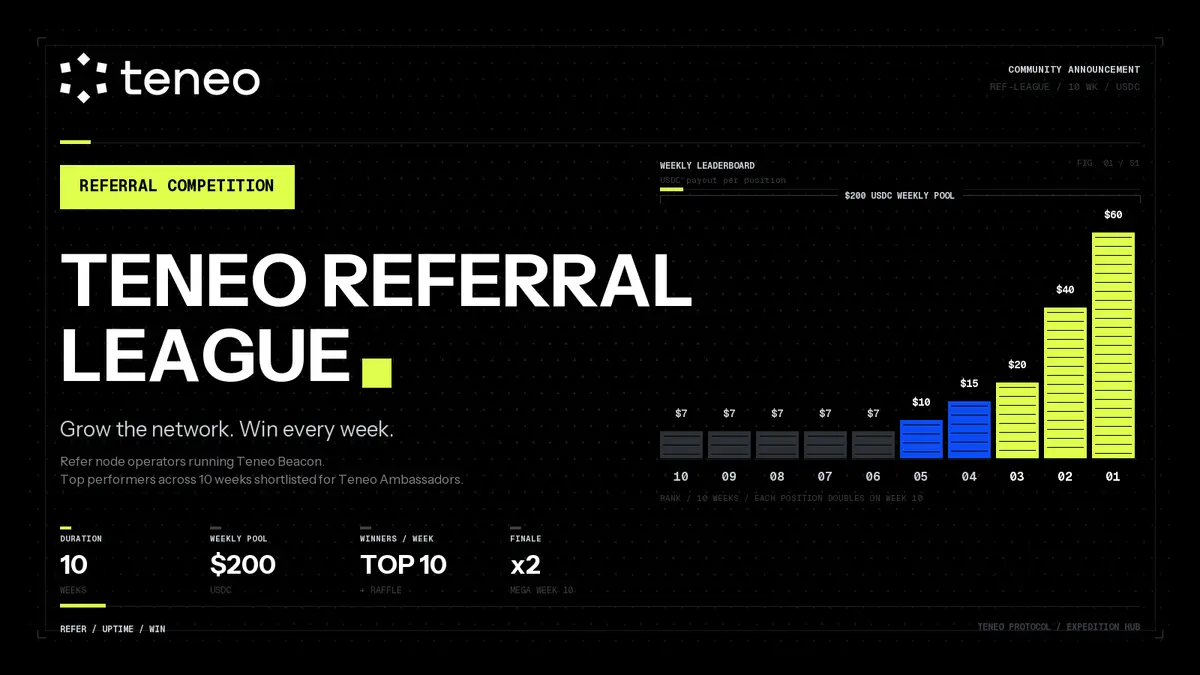
Teneo - The team launched the Referral League. This is a 10-week competition. It gives weekly USDC prizes to people who refer to new node operators. Top performers can become Teneo Ambassadors.
Teneo also released new guides for builders. One key guide shows how the Instagram Agent works in the Teneo CLI. This makes things easier for developers. They also released practical tools, including agents for Messari, CoinMarketCap among others. The community stayed active. Many users ran nodes and tested agents. Teneo kept sharing updates on real use cases. They focused on practical tools that help agents earn and operate onchain.
Closing Remarks
June 2026 tested conviction more than it rewarded it. Bitcoin's steepest monthly decline since 2022, a record $4.5 billion in ETF outflows, and the reshaping of the European market ahead of the MiCA deadline made for a genuinely difficult month for the industry, yet the underlying regulatory and institutional build-out continued largely undisturbed. The GENIUS Act's implementing rules advanced on schedule, the SEC signaled a shift toward clearer, rules-based crypto oversight through Project Crypto, and six of the largest US banks committed to a shared tokenized deposit network, underscoring that traditional finance's move onto blockchain rails is accelerating rather than pausing for market conditions.
As a group, June marked the conclusion of a long and necessary chapter. The publication of our audited 2025 financial statements for both Advanced Blockchain and Incredulous Labs Ltd resolved the outstanding uncertainties from 2023 and 2024 and avoided a renewed disclaimer of opinion. The net loss for the year reflects the cost of that clean-up: valuation adjustments, write-downs, and elevated legal and advisory expenses tied to the review of historical matters. It was a difficult but deliberate trade-off, and one we believe sets the foundation for a genuine restart under "ABAG 2.0."
Across our portfolio, June brought continued momentum despite the broader market pullback: Panoptic's V2 launch and new Vault Suite, Polymer crossing $1 billion in total USDC volume, Peaq's compute partnership with Arcium, and Silencio's MiCA whitepaper and token transparency filing all point to projects building through the cycle rather than around it.
We remain focused on disciplined execution and completing the restructuring work that will let us turn fully toward growth. We look forward to updating you at our AGM on 27th August 2026 and sharing further progress in the months ahead.
Best regards,
Your Advanced Blockchain Team
.svg)

.svg)

