Ecosystem Update July 2026

We are excited to bring you the July 2026 Ecosystem Update, covering the latest developments across the macro environment, market performance, the broader industry landscape, and Advanced Blockchain's ecosystem.
Macro Overview

Source: Coingecko
Total crypto market capitalization opened July near $2.13 trillion before staging a sharp two-day recovery toward $2.27-2.28 trillion as the initial shock of MiCA's July 1 enforcement gave way to clarity: the regulatory change was disruptive but contained, and well-capitalized exchanges stood ready to absorb displaced users. The market consolidated in that $2.25-2.30 trillion band through the first two weeks, tracking sideways as participants assessed the legislative outlook. The most pronounced upward move of the month arrived in the July 15-23 window, with the cap peaking near $2.35-2.36 trillion, a move that coincided with three reinforcing catalysts in quick succession: Japan's House of Councillors approving the FIEA reclassification on July 15, and T. Rowe Price's TKNZ ETF launch alongside Citadel Securities' $400 million Crypto.com investment on July 16, all of which signalled that both sovereigns and major traditional-finance institutions were deepening rather than retreating from crypto exposure. The subsequent fade from the peak through late July correlates neatly with the CLARITY Act's political impasse and the $700 million-plus token unlock wave in the final week, which introduced mechanical selling pressure into already thin summer volumes. The sharp drop visible at the very end of the chart into August 1 reflects that pressure fully washing through, with the market ending the month around $2.22 trillion, roughly where it had settled after the initial MiCA bounce, suggesting the mid-month institutional newsflow provided a temporary lift rather than a durable repricing.
US Legislation: The CLARITY Act Races the August Recess
The central US regulatory story of July was the CLARITY Act's sprint toward a Senate floor vote before the chamber's August recess. Following the collapse of ethics negotiations in June, the path forward narrowed significantly. Updated bill text was released on July 17 immediately after a meeting between Senate Republicans and President Trump at the White House. Senator Cynthia Lummis pushed for a floor vote in the week of July 20, and Senate Majority Leader Thune pledged to schedule floor consideration before the August recess, which begins on August 8. The arithmetic remained challenging: the bill required 60 votes to overcome a potential filibuster, meaning at least seven Senate Democrats would need to cross the aisle, and as of July 17, not a single Democrat had publicly indicated support for the draft.
On the GENIUS Act front, the July 18 statutory deadline for federal agencies to publish final implementing rules passed without a single final rule being issued. Across five agencies, there were 11 proposed rulemakings and zero final rules as of the deadline. A joint proposal published in late June remains open for comment through August 21. The missed deadline does not invalidate the GENIUS Act itself, as the law's implementation provisions carry a backstop date of January 18, 2027. The delay effectively compresses the compliance window for stablecoin issuers.
A separate but significant regulatory milestone arrived on July 10, when Circle received final approval from the Office of the Comptroller of the Currency to establish a federally chartered national trust bank, to operate under the name Circle National Trust. The approval makes Circle the first major stablecoin issuer to operate under a national banking charter, placing it under direct OCC supervision and giving USDC a regulatory standing structurally equivalent to that of traditional bank deposits. The practical implications are substantial: Circle National Trust will initially provide fiduciary digital asset custody services, with USDC reserve management planned as a future capability that would bring those operations under direct federal oversight. Circle's application had been filed in June 2025, with conditional approval granted in December 2025. Granting a crypto-native firm a national banking license also represents a materially more constructive posture toward the sector than the enforcement-first regulatory environment of the prior several years, and is likely to accelerate parallel licensing efforts by other stablecoin issuers.
MiCA Takes Effect: Europe's Crypto Market Forced to Consolidate
The July 1 enforcement of the MiCA framework's transitional deadline produced immediate and visible consequences across the European crypto market. The most significant single event was the forced delisting of Tether's USDT from all regulated EU exchanges. Tether had declined to seek MiCA authorization, publicly contesting the regulation's requirement that stablecoin issuers hold a substantial portion of reserves in licensed EU bank deposits, arguing the structure creates systemic risks of its own at the scale USDT operates. EU regulated platforms removed USDT from their order books on July 1, marking the largest forced delisting in the history of the crypto market. Individual holders may continue to hold USDT privately, but the restriction removes it from the primary trading and settlement infrastructure used by retail and institutional EU participants. Circle's USDC and EURC emerged as the primary beneficiaries, gaining market share across licensed platforms in the immediate aftermath.
The Binance suspension, announced in late June, also took effect on July 1, removing the world's largest exchange by volume from the EU market at the same moment as the USDT delisting. The combined impact of Binance's exit and USDT's removal left an estimated 10 million European crypto users searching for alternative platforms. Exchanges that secured full CASP authorization, including Coinbase, Kraken, OKX, Bybit, and Gemini, were positioned to absorb a substantial share of displaced user volumes, accelerating the concentration of European crypto trading among a handful of regulated incumbents. MiCA's July 1 enforcement thus achieved in a single day what years of national-level regulatory pressure had not: a hard consolidation of the EU crypto service provider market.
Infrastructure Advances Quietly
Away from the headline price moves and legislative drama, several infrastructure developments
in July pointed to the continued maturation of the underlying technology stack. On-chain real world asset value reached approximately $33.5 billion, up from roughly $32 billion in May, with tokenized equities growing approximately 50% over the prior 30 days. The DTCC's pilot
program involving more than 50 firms remained on track, and BlackRock's BUIDL continued to serve as collateral across derivatives and DeFi lending platforms, deepening the integration between tokenized Treasuries and institutional workflows.
At the protocol level, Solana raised its block compute limit from 60 million to 100 million
compute units, alongside ongoing preparations for the Alpenglow consensus upgrade, which remained in test cluster with a mainnet target of Q3 or Q4 2026. Ethereum, Solana, Base, and Avalanche all flagged major protocol upgrades for the second half of 2026, with Ethereum's Glamsterdam upgrade targeting late 2026 and the Hegota upgrade focusing on Verkle Trees and censorship resistance to follow. These upgrades are proceeding on their own technical schedules regardless of market conditions, reinforcing the point that the infrastructure layer of the crypto ecosystem continues to develop through cycles.
Institutional and Corporate Validation Accelerates
July produced a cluster of institutional and corporate commitments that, taken together, paint a picture of the crypto industry attracting a qualitatively different caliber of traditional-finance participation. On July 16, T. Rowe Price, managing approximately $1.9 trillion in assets, launched what it described as the industry's first actively managed multi-token spot crypto ETF, trading under the ticker TKNZ. The product holds a diversified basket of digital assets including Bitcoin, Ether, BNB, XRP, Solana, and Hyperliquid, with portfolio managers able to adjust allocations based on market conditions and research rather than tracking a fixed index. The launch marks a meaningful departure from the single-asset Bitcoin and Ethereum ETF products that have dominated since January 2024 and signals that asset managers of T. Rowe Price's scale and conservative positioning now view multi-asset crypto exposure as a viable institutional product category. The fund carries a net management fee of 0.75% through May 2027 and is managed by the firm's head of digital assets, Blue Macellari.
On the same day, Citadel Securities announced a $400 million investment in Crypto.com at a $20 billion valuation. Citadel Securities is not a venture investor by nature, it is one of the world's largest market makers and a firm that historically maintained clear distance from crypto markets as an equity investor. An equity commitment of this size, at this valuation, is a statement about the long-term direction of crypto's market structure as much as it is an investment thesis. The implicit message is that a firm whose business model depends on where liquidity flows over the next decade sees crypto trading infrastructure as a core part of that landscape.
Reinforcing this trend at the corporate level, dozens of major companies publicly signaled openness to holding crypto on their balance sheets during the month, continuing a shift from the cautious, experimental Bitcoin treasury allocations seen in prior cycles toward a broader willingness to treat digital assets as a legitimate component of corporate treasury management. The convergence of a T. Rowe Price product launch, a Citadel Securities equity stake, Circle's national banking charter, and accelerating corporate balance sheet adoption in the same month is notable precisely because it is not driven by price momentum. It suggests a base of structural institutional conviction that is forming independent of short-term market conditions.
Group Update
The AGM agenda includes several items that reflect concerns raised by our shareholders throughout the year. The group is proposing a reduction in the number of Supervisory Board representatives to four people, with a corresponding reduction in Supervisory Board remuneration, as well as the nomination of Mr. Andreas Appelhagen as a shareholder representative to the Supervisory Board. Mr. Appelhagen is a shareholder, a notable creditor, and also a project partner of the company.
Additionally, the group is inviting its shareholders to approve a capital increase without exclusion of subscription rights, hereby strengthening the company’s balance sheet and financial situation while addressing shareholder concerns. We are also seeking approval for the issuance of new convertible bonds, primarily to refinance an existing convertible bond maturing in September 2027.
Beyond the AGM agenda and its preparation, our team continues to pursue diverse business development activities, ranging from aligning synergies between portfolio companies, to monetizing existing assets, to further developing projects in the company's pipeline, all of which will be reported on at the AGM.
It is the overall objective to “make Advanced Blockchain re-investable again”.
Portfolio Update

Silencio - Silencio team signed its largest contract to date: a $250,000 deal with one of the world’s leading voice AI companies for single- and multi-speaker voice data in Tagalog and Cebuano. The team reported 3x quarter-over-quarter revenue growth in the first six months of commercializing Voice AI, run by a 14-person team. Under the token mechanics, 75% of revenues route back to the ecosystem to fund $SLC buybacks and burns once cumulative data sales cross $1 million; Q1 and Q2 combined put them roughly 40% of the way there.
Throughout July, Silencio also published a steady stream of technical explainers covering transcription quality standards, wake-word and TTS training data, voice biometrics, in-vehicle voice AI, and GDPR/EU AI Act compliance for speech data. Product changes on the way include dynamic pricing for contribution tasks and a shift to a flat 10% referral rate.

Polymer - The polymer team expanded zero-slippage bridging to new chains like Injective and Hyperliquid. Users could now move USDC across 18 major chains with full value delivered and zero slippage, serving a large volume of transfers.
One example involved nearly $6 million from Pharos Network to Ethereum. Another was $5.2 million bridged via Jumper. The bridged volume stayed steady even when the broader market slowed.They also shared how Polymer uses proofs for secure and fast interop. This makes cross-chain moves reliable for large amounts.

Panoptic - Panoptic team continued pushing V2 features and vaults,showing how users can earn extra yield on Uniswap LP positions by lending them out and using options strategies. One example position earned 31% more premium than standard Uniswap fees. Panoptic’s v2’s TVL has grown steadily through July, sitting above the $2 million according to DefiLIama, up from about $1 million at the start of July – more than doubling over one month.
Moreover, the team also posted about market-neutral vaults and volatility harvesting, explaining how Panoptic turns LP exposure into options-like opportunities. Backtests and comparisons were shared showing the advantages of their system, with continued emphasis on how onchain options can help LPs in changing market conditions, especially after Uniswap's fee switch changes.

zCloak Network - zCloak team introduced the Workflow Marketplace. Builders can now publish, trade, and protect full AI workflow assets. These go beyond simple prompts and include skills, agent configs, tool calls, model choices, and permission rules.
On the regulatory side, the team covered the Monetary Authority of Singapore’s SAFR whitepaper on safeguards for agentic finance. The update pointed to the Agent Trust Protocol (ATP) on GitHub as a practical way to add secure identity and runtime protection for AI agents.
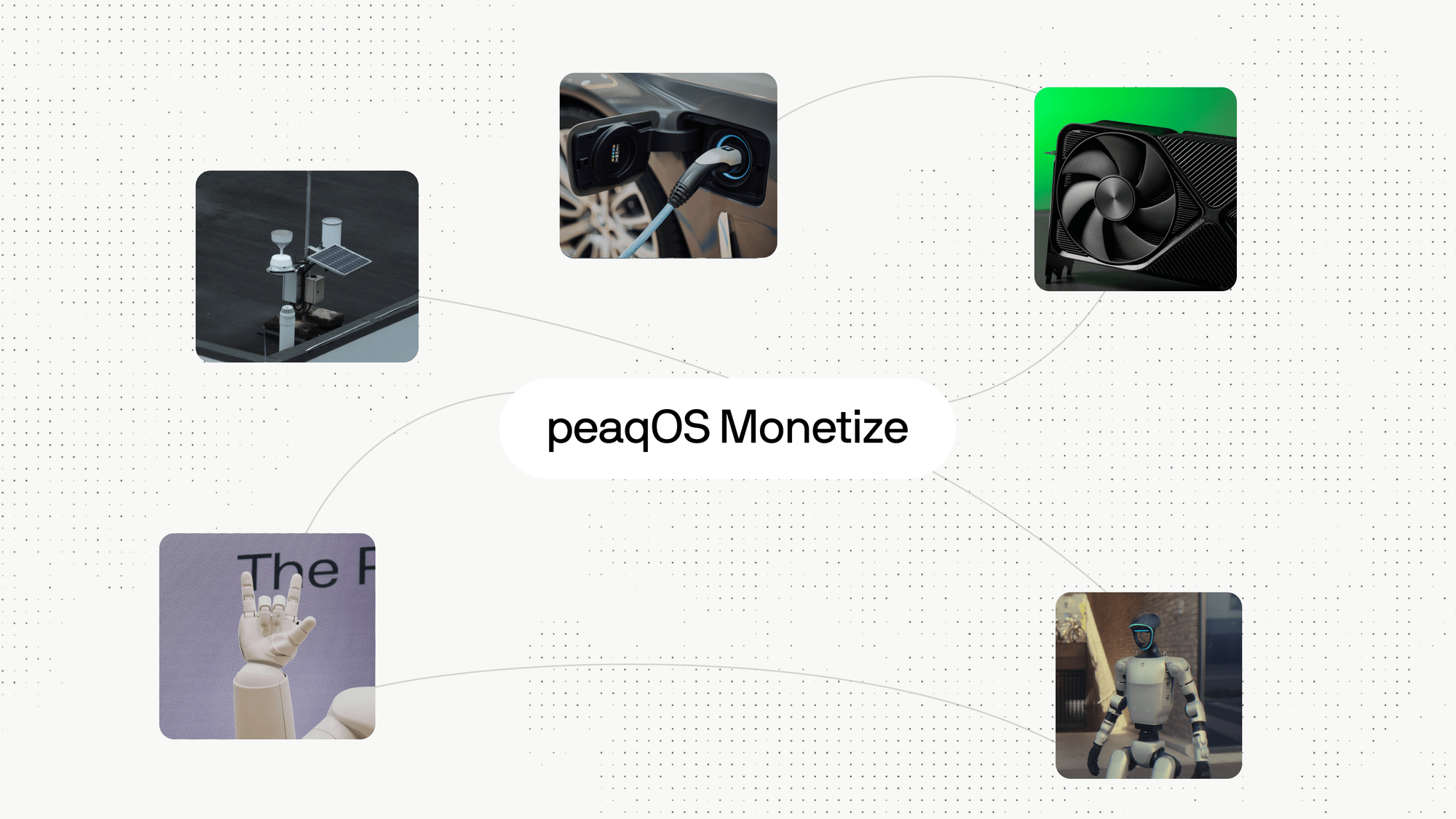
Peaq - The Peaq team released Economics 2.0. This upgrade creates stronger demand for $PEAQ through machine bonding, staking, and burns. It is designed to support real machine adoption without relying on selling other assets.
The team also launched peaqOS Monetize, letting idle machines sell resources like compute or storage across networks. Payments settle onchain to the machine's wallet, turning idle hardware into revenue-generating assets. Work continued on the Machine Economy with new functions and integrations throughout the month.

Teneo - Accurast and Teneo teams announced a partnership to fix the last weak spot in "verifiable AI": where the AI actually runs. Having on-chain identity, payments, and audit trails doesn't mean much if the AI itself still runs on one company's private server that you just have to trust.
Teneo's 760+ live AI agents will now run on Acurast's 270,000 smartphones, each protected by the same kind of secure chip used in banking apps. This creates a tamper-proof space (called a TEE) where the AI runs safely, even the phone's own owner can't see or touch it. The agents earn stablecoins for their work and spend them on this secure compute, with no accounts, no API keys, and no humans involved. First step: putting a live trading agent into one of these secure phone spaces and publicly sharing how it works, so other builders can copy it.

XMAQUINA - The team published their Humanoid Digest for July. They highlighted major funding rounds, new robot models, and industry progress in the humanoid space. This update highlighted big investments in companies like Walden Robotics, Holiday Robotics, and Humanoid. Furthermore, XMAQUINA team shared updates on its key portfolio holdings such as Apptronik and Figure AI.
Lastly, the team also executed its recent governance proposals entailing a strategic investment in Gecko Robotics.
Closing Remarks
July 2026 was a month of institutional validation set against regulatory turbulence. MiCA's July 1 enforcement forced the largest single-day consolidation in crypto market history, delisting USDT from EU exchanges and pushing an estimated 10 million European users toward newly authorized platforms, while the CLARITY Act's sprint toward a Senate vote and the GENIUS Act's missed rulemaking deadline underscored how unsettled the US regulatory picture remains. Yet the month's defining signal came from traditional finance leaning in rather than pulling back: T. Rowe Price launched its first actively managed multi-token crypto ETF, Citadel Securities took a $400 million stake in Crypto.com, and Circle secured a national trust bank charter — three separate, weighty commitments arriving within days of each other, none of them driven by price momentum.
As a group, we used July to finalize the agenda for our upcoming AGM on August 27, 2026 — addressing shareholder concerns directly through proposed changes to Supervisory Board composition and remuneration, a capital increase to strengthen our balance sheet, and refinancing of our 2027 convertible bond. These items are the practical mechanics behind the new group strategy, and we look forward to discussing them with our valued shareholders.
Across our portfolio, July brought tangible commercial progress alongside continued building: Silencio signed its largest contract to date at $250,000 with a leading voice AI company, Polymer kept scaling cross-chain volume with individual transfers reaching into the millions, Panoptic's V2 TVL more than doubled over the month, and Acurast and Teneo announced a partnership to bring verifiable AI execution to smartphone infrastructure — each a sign that portfolio companies are converting technical groundwork into real usage and revenue.
We look forward to seeing shareholders at our AGM on August 27th, where we'll share further progress on both the group and portfolio fronts.
Best regards,
Your Advanced Blockchain Team
.svg)

.svg)

