Ecosystem Update December 2025
We are pleased to share the December 2025 Ecosystem Update, highlighting developments in the macro environment, market performance, the broader industry landscape, and Advanced Blockchain’s ecosystem.
Macro Overview
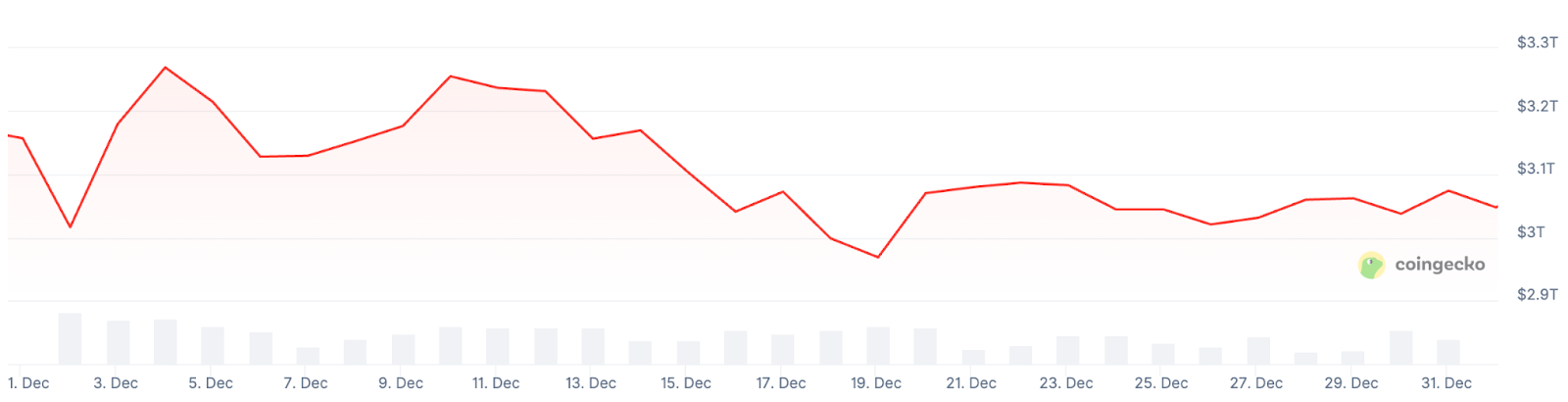
The total crypto market cap spent most of December 2025 in a gradually declining range, sliding from just above $3.1 trillion at the start of the month toward the $3.0 trillion level by mid-December. Early in the month, the market saw a brief upswing - peaking around December 5 - but this momentum quickly faded as selling pressure re-emerged, mirroring the broader risk-off tone and the outflows seen earlier in U.S. spot Bitcoin ETFs. From December 10 onward, the market cap trended steadily lower, reaching its monthly low near December 19.
After that point, market conditions stabilized. From December 20 through the end of the month, total crypto market capitalization traded in a relatively tight band around $3.0 trillion, with mild intraday fluctuations but no strong directional movement. This sideways consolidation aligned with improving ETF inflow dynamics, early signs of on-chain accumulation and a more constructive sentiment among analysts who saw indications that Bitcoin and the broader market might be forming a short-term bottom.
Overall, December was characterized by early-month volatility followed by mid-month weakness and late-month stabilization, suggesting that while the market remained under pressure, selling activity had begun to slow and the market was searching for support heading into January 2026.
December 2025: The month for European Crypto Practitioners
The EU crypto industry is busy with delivering surprising achievements before 2025 ends. In the year since the European Union’s Markets in Crypto-Assets Regulation (MiCA) became fully applicable to stablecoins, the euro-denominated stablecoin market has roughly doubled in size to about $680 million in market capitalization, reversing a prior contraction and significantly outpacing broader stablecoin market growth; this expansion has been driven by major issuers such as Stasis’ EURS, Circle’s EURC and Societe Générale’s EURCV, whose combined transaction activity and rising public interest indicate growing adoption for euro-pegged digital money across payments, fiat on-ramps and trading, although the market remains small compared with the nearly $300 billion in U.S. dollar-backed stablecoins, highlighting both MiCA’s positive impact on issuer certainty and the still nascent stage of euro stablecoins within the global digital asset ecosystem.
In early December 2025, a consortium of ten major European banks including UniCredit, Danske Bank, DekaBank, SEB, Raiffeisen Bank International and BNP Paribas announced the creation of a new Amsterdam-based company called Qivalis to develop and issue a MiCA-compliant, euro-pegged stablecoin aimed at strengthening Europe’s digital payments infrastructure and providing an alternative to U.S. dollar-denominated stablecoins; the project has applied for an Electronic Money Institution (EMI) licence from the Dutch central bank and targets a launch in the second half of 2026, reflecting rising interest from traditional financial institutions in regulated digital assets and the strategic importance of stablecoins for cross-border settlement, programmable payments and broader financial innovation in the EU.
Also in early December 2025, French banking group BPCE - one of France’s largest traditional financial institutions - launched in-app cryptocurrency trading for retail customers through its Banque Populaire and Caisse d’Épargne mobile applications, allowing users to buy and sell major digital assets such as Bitcoin (BTC), Ether (ETH), Solana (SOL) and the USDC stablecoin via a dedicated digital asset account managed by BPCE’s subsidiary Hexarq; the initial rollout covers roughly 2 million clients across four regional banks, with plans to extend services to its full 12 million-strong customer base by 2026, reflecting increasing demand for integrated crypto services among mainstream banking customers and intensifying competition with established fintech and neo-bank platforms in Europe while operating within evolving regulatory frameworks such as MiCA.
Whilst in other parts of the world
While Europe was pushing forward with regulatory clarity and institutional adoption, developments elsewhere, especially in the United States, highlighted a mix of strategic repositioning and renewed market momentum.
In late November 2025, major European digital asset manager CoinShares withdrew its U.S. spot ETF registration filings for proposed XRP, Solana (staking) and Litecoin products, submitting Form RW requests to the Securities and Exchange Commission that effectively halted all three applications before any shares were issued, as the company shifts strategy ahead of its planned $1.2 billion Nasdaq SPAC listing and reacts to an increasingly crowded and competitive U.S. single-asset ETF market dominated by larger incumbents, while also winding down its Bitcoin futures leveraged ETF and planning to focus on higher-margin crypto equity, thematic basket and actively managed strategies, signaling broader structural pressures in the altcoin ETF space despite strong investor flows into competing products this year.
Against this backdrop of strategic recalibration, U.S. spot Bitcoin ETFs broke a four-week streak of net outflows by attracting roughly $70 million in weekly inflows, led by strong demand in Fidelity’s FBTC and ARK 21Shares’ ARKB products that offset outflows from BlackRock’s IBIT, lifting total net assets across all U.S. spot Bitcoin ETFs to around $119 billion and providing a signal of renewed investor interest and potential market stabilization after significant redemptions earlier in the month; alongside this reversal in ETF flows, spot Ether ETFs also flipped positive with over $300 million in weekly inflows, and analysts noted technical indicators and on-chain accumulation suggesting that Bitcoin may be forming a short-term bottom, reinforcing a cautiously optimistic view that the market could be emerging from its recent corrective phase.
Meanwhile, innovation continued on the product front. In mid-December 2025, Coinbase announced a major System Update confirming the launch of on-platform prediction markets, enabling users to trade and speculate on real-world event outcomes directly within the Coinbase ecosystem; this move adds Coinbase as another competitor in the growing prediction market space.
Regulation also advanced meaningfully in the U.S. toward the end of the year. In mid-December 2025, five major crypto firms - Circle, Ripple, Fidelity Digital Assets, BitGo and Paxos - received conditional approval from the U.S. Office of the Comptroller of the Currency (OCC) to become federally chartered national trust banks, a major regulatory milestone that could extend federal oversight and bank-like regulatory clarity to digital asset custodial and stablecoin activities and represents a meaningful shift in how digital finance firms interface with the traditional U.S. banking system; the approvals allow these companies to convert existing state trust charters or establish new federally supervised trust banks, potentially enhancing investor confidence and operational scale while embedding stablecoin issuers more deeply in regulated financial infrastructure, and were widely welcomed by industry leaders as a signal that crypto companies can operate under mainstream fiduciary standards.
Group Update
In the first week of December 2025, Talisman team completed its Token Generation Event listing the token Kucoin, MEXC and Uniswap, as communicated earlier via the respective corporate news.
Following the completion of the TGE, Incredulous Labs received its 693,361 $SEEK tokens from its initial investment made in 2021. Subsequently, the Talisman team informed us of an adjustment to our vesting schedule, offering more favorable terms compared to the original SAFT. The original vesting schedule provided for a 36-month vesting period with quarterly vesting, with the first vest occurring three months after the TGE. Under the revised terms, the vesting has been adjusted to a 28-month linear vesting schedule with a 2-month cliff.
On the operational level, we initiated the accounting process for Incredulous Labs in December, with a planned conclusion by early February, to be followed by the respective audits of Incredulous and its subsidiaries. In addition, the financial closing of Advanced Blockchain AG is scheduled for early February 2026.
In parallel, the AVS valuation process for equity positions and SAFT agreements has been initiated to ensure accurate and transparent portfolio reporting. Furthermore, we are in the final stages of completing our first research report in collaboration with Edison Research, which is expected to be published in due course and will support enhanced market visibility and investor communication.
During the second half of December, we were occupied in the preparation of the upcoming Annual Shareholders Meeting (AGM), the details of which have been published on a dedicated page accessible via the following link: https://hv.blockchain-ag.de/. The AGM is scheduled to take place on 10 February at 9:30 a.m. CET and will be held in virtual format.
Beyond the preparation of the AGM, the second half of December 2025 was characterized by intensive work across a range of strategic and operational initiatives aimed at positioning the company for 2026.
These efforts included the development of the 2026 strategic plan, the evaluation of new investment opportunities currently in our pipeline and sourced through our network, and the review of capital allocation and resource deployment in line with the company’s short- to mid-term objectives. In addition, we are currently working on a revamped version of the company’s website to reflect its new vision and strategic pillars, while also implementing cost-reduction measures, capacity planning, and further organizational reviews to ensure the company is adequately structured to execute on its strategic priorities and maintain a leaner organizational structure. Collectively, these initiatives form the foundation for a more focused, operationally disciplined, and execution-driven year ahead.
Portfolio Update
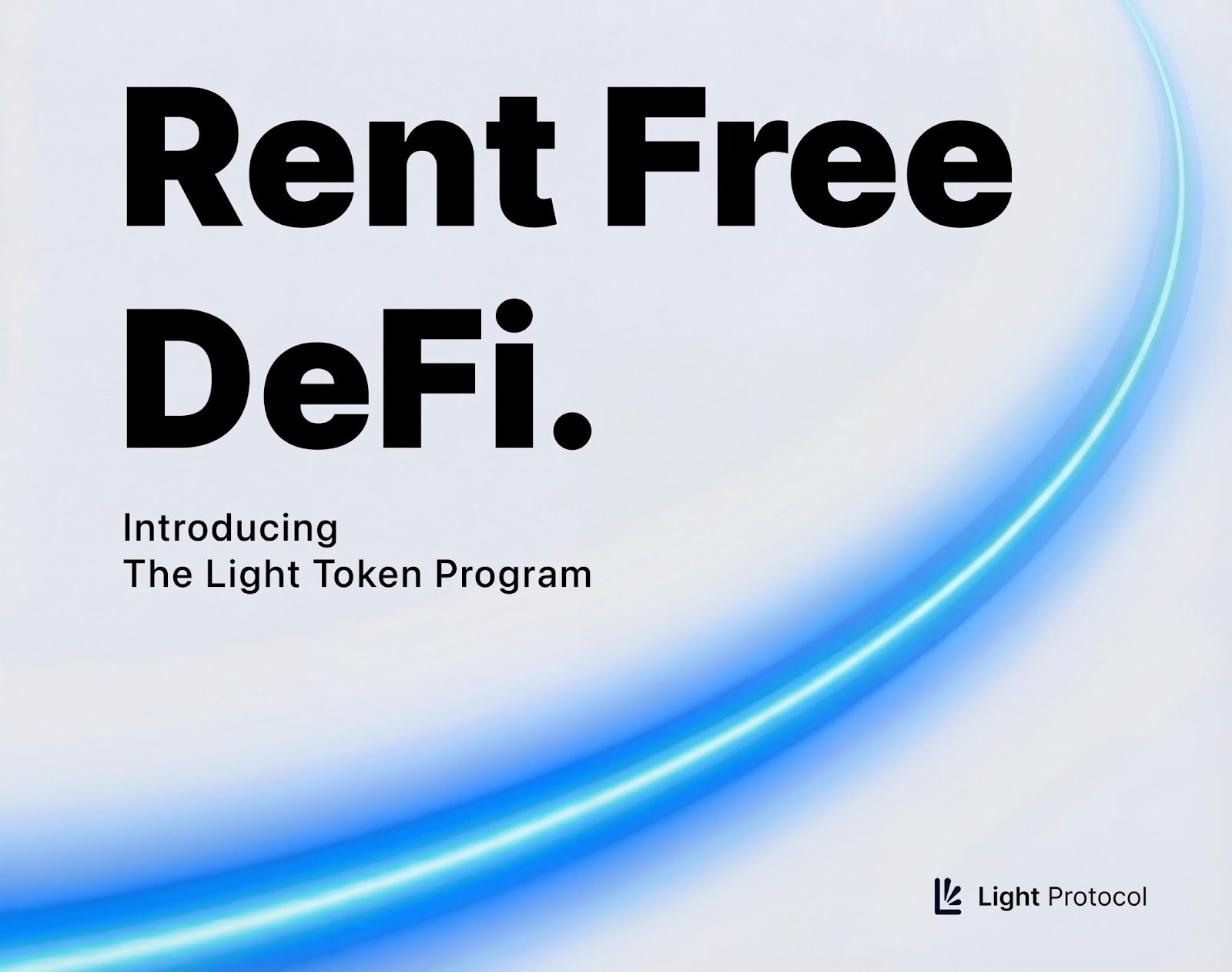
Light Protocol: December was a milestone month for Light Protocol as the team introduced the Light Token program, a high-performance token standard designed for rent-free DeFi on Solana. In a recent announcement, the official Solana account highlighted that Light Token is ~200× cheaper than SPL (standard token type on the Solana blockchain, roughly equivalent to ERC-20 tokens on Ethereum), while remaining DeFi-compatible, positioning it as a practical scaling primitive for token-heavy applications.
MagicBlock announced a collaboration with Light Protocol to enable developers to interact with compressed accounts “like normal Solana accounts,” explicitly framing it as a way to “stop paying rent.” This points to growing real integration momentum beyond just protocol R&D.
The launch also received broader coverage in Breakpoint recaps, which noted Light Token’s core value proposition: leveraging ZK Compression to reduce the cost of provisioning accounts/tokens, a critical unlock if Solana is to support consumer-scale applications without state-cost friction.
zCloak Network: December was an active month for zCloak Network, with the team continuing to advance its vision around privacy-preserving identity and verifiable credentials. Throughout the month, zCloak shared multiple partnership announcements for their newly launched product, zCloak Money, highlighting progress on its ZK-based identity stack and reinforcing its positioning as infrastructure for compliant, on-chain privacy. Partners included Rooch Network, UXLINK, Awe Network, Block Valley, Chain Aware, among others.
A key theme in December was real-world applicability of decentralized identity. zCloak emphasized use cases around selective disclosure, credential verification, and privacy-first compliance, showcasing how zero-knowledge proofs can enable users to prove attributes without revealing underlying data.
Furthermore, the team also emphasized the ongoing ecosystem expansion and product development, including protocol-level improvements and broader awareness around ZK credentials as a foundational layer for Web3 identity, DeFi access, and regulated on-chain interactions.
Toward the end of the month, zCloak continued to reinforce its long-term roadmap, focusing on making privacy-preserving identity primitives more accessible to developers and easier to integrate across applications.
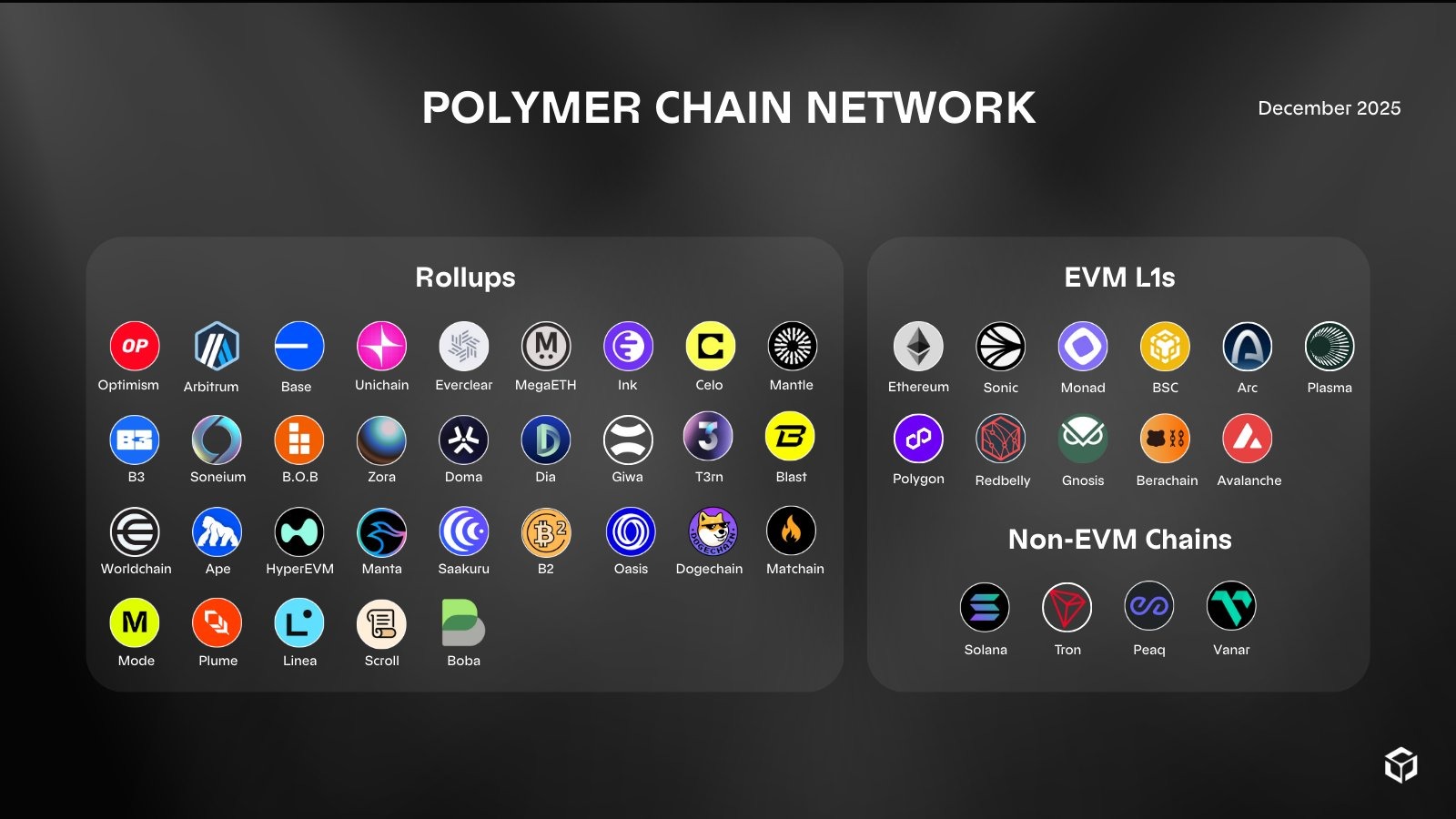
Polymer: December continued to reinforce Polymer Labs’ role as a major interoperability infrastructure player. The core mission remains building a universal, modular Inter-Blockchain Communication (IBC) router that connects Ethereum Layer-2 rollups, enabling seamless cross-chain applications and communication.
Polymer shared that its cross-chain infrastructure has surpassed $1 billion in cross-chain volume, underscoring growing adoption and real usage across ecosystems.
In parallel, a core team member shared a detailed perspective on Polymer’s “Lean Intent Framework,” outlining how the team is thinking about simplifying and standardizing cross-chain execution going forward. The post emphasized architectural discipline and long-term scalability rather than short-term feature launches.

Panoptic: In December, Panoptic used its social channels to confirm that its transition to V2 with Perpetual Option Vaults (POVs) remains on track, signaling the next major version is actively in development. A year-end message from the team framed 2025 as a critical build phase, with Panoptic working to deliver more robust, scalable options infrastructure.
The protocol reminded its community that Panoptic’s core differentiator remains, perpetual, oracle-free on-chain options built on top of automated liquidity pools (rather than traditional expiry-based or oracle-dependent derivatives). This continues to distinguish Panoptic from legacy on-chain options approaches.
Panoptic also reiterated its commitment to security via its recent audit with code4rena, pointing out that all V1 issues have been resolved and that the audit process for V2 is underway, reinforcing trust ahead of the new version launch.
Peaq: In December, peaq continued to further build its machine-economy infrastructure and engaged its community with several updates. The team reaffirmed commitment to expanding real-world use cases, emphasizing integration readiness for new DePIN and IoT partners. One tweet noted progress toward onboarding additional machine-economy projects, signaling that the peaq ecosystem remains active and developer-focused.
Another announcement highlighted ongoing expansion of MachineX, outlining several projects powering robotics, DePIN, and AI infrastructure such as Auki and the ANyONe Protocol whose tokens are currently listed on MachineX.
Peaq app also got an update with Hardware Store where you have an overview of all the devices you can already start earning with on peaq and special discounts for anyone ordering via peaq app
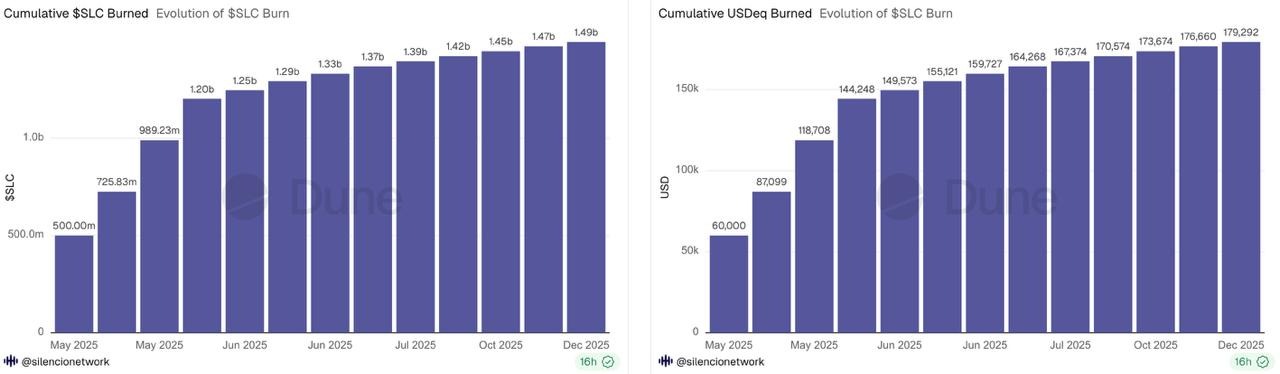
Silencio: In December, Silencio shared several updates outlining the rising demand and network scaling challenges. One update highlighted that demand for Silencio’s voice ai data currently exceeds supply by 100×, clearly signaling growing interest from data consumers relative to the amount of data being collected. This framed December as a month focused on addressing supply-side growth.
The team also used December to actively incentivize new contributors, encouraging users to participate in data collection and help close the supply gap. Multiple posts reinforced Silencio’s core use case of collecting real-world ambient Voice ai data via application, underlining that expansion of contributor participation remains the top priority.
Toward the end of the month, Silencio hinted at upcoming product or network updates, indicating that December was used as a buildup phase ahead of further releases. Overall, communications were centered on scaling data availability, onboarding more users, and preparing the network for higher demand rather than introducing new features.
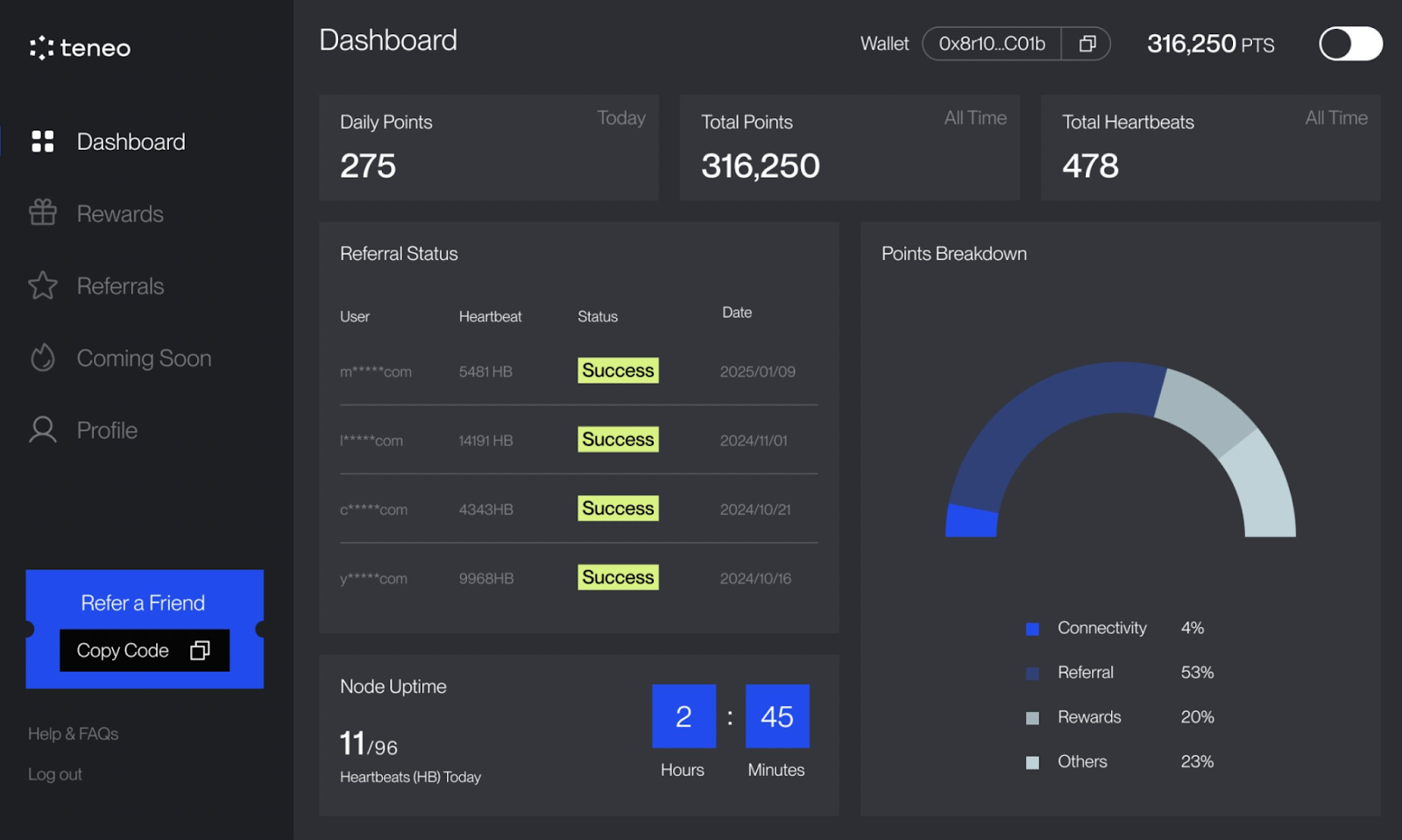
Teneo: In December, Teneo highlighted concrete progress around its agent ecosystem and integrations. Early in the month, the team pointed to the rollout of a “pay-per-result” primitive that Teneo is integrating directly into real-time, autonomous agents, framing it as a cleaner way to monetize agent outputs rather than raw data access.
The project also announced that its first Genesis Program is complete, noting that nearly 300 agents were built, tested, and deployed, and spotlighting standout agent builds such as BTC Indicator and CryptoSentinel AI, positioning them as examples of “real operational value” beyond prototypes.
Towards the close of the month, Teneo was featured in Messari’s State of AI 2025, reinforcing credibility and visibility for the project’s AI-agent narrative. Separately, peaq was also referenced Teneo’s traction, stating that 6M+ people are already turning public data into live insights via an app on peaq, positioning Teneo as one of the more scaled data/agent networks in the ecosystem.
—------------------------
Closing Remarks
December capped off an extremely active year for us as a group not only full of challenges but also laying down many future opportunities in the years ahead. Throughout 2025, we navigated a challenging macro environment while developing a new strategic path for the group, monetizing our existing assets and strengthening our operational and structural foundation. Importantly, 2025 also marked the conclusion of significant historical cleanups related to Incredulous Labs, resolving legacy accounting matters and improving clarity, transparency, and governance across the group.
Across the ecosystem, we saw meaningful progress in product development, real-world adoption, regulatory clarity, and infrastructure maturity—reinforcing our conviction in the long-term growth of the digital asset space—while also witnessing several projects that, unfortunately, failed to deliver on their original vision. We are closely assessing the handling of these unsatisfactory outcomes.
Lastly, we plan to publish our 2025 end-of-year report, outlining a full recap of 2025 and highlighting some key events in 2026, on our website on 7 January 2026.
We thank our shareholders and partners for their continued support and look forward to sharing further progress in the coming months.
Best regards,
Your Advanced Blockchain Team
.svg)

.svg)

