Ecosystem Update April 2026

We are pleased to share the April 2026 Ecosystem Update, highlighting developments in the macro environment, market performance, the broader industry landscape, and Advanced Blockchain’s ecosystem.
Macro Overview

Source: CoinGecko
April 2026 was a sharp contrast to March’s volatile and inconclusive performance. The total crypto market cap traced a clean, sustained recovery arc - climbing from approximately $2.4 trillion at the start of the month to a peak of around $2.75 trillion by April 18, before consolidating in the $2.6-$2.7 trillion range through the final two weeks. This represents a solid ~9% growth on a monthly basis - Bitcoin's best April performance since 2020.
The early rally was largely driven by a combination of easing geopolitical risk (ceasefire signals in the Iran conflict that had battered March), the return of institutional capital through spot Bitcoin ETFs, and momentum from fresh regulatory tailwinds. The strongest leg of the rally - from ~$2.50T to ~$2.75T - coincided almost precisely with the busiest week of institutional news: the HKMA granting Hong Kong's first stablecoin licenses on April 10, Deutsche Börse's $200M Kraken investment on April 14, and the Paris Blockchain Week on April 15–16, which concentrated global institutional crypto attention in a single window. Unlike March, April's chart shows no severe reversal - the late-month dip from ~$2.75T to ~$2.62T was modest and orderly, reflecting typical consolidation ahead of the April 28-29 FOMC meeting rather than any panic-driven selloff. Taken together, the April market cap chart tells the story of a crypto market finding its footing after months of macro-driven suppression, finally allowing its structural positives - institutional inflows, regulatory clarity, and protocol development - to express themselves in price.
Institutional Capital Floods Back - ETFs Lead a Market Reversal
April marked the clearest inflection point in institutional sentiment since the January 2024 ETF launches, with multiple streams of capital flowing back in simultaneously.
For the first time since early 2026, Bitcoin spot ETFs recorded their first monthly gain, ending a four-month streak of outflows and selling pressure. U.S. spot Bitcoin ETFs logged eight straight days of inflows totaling $2.10 billion through April 23, per SoSoValue, pushing cumulative net inflows since launch to $58 billion and total assets under management to $102 billion. BlackRock's IBIT led the charge with $214 million in a single day of inflows, followed by ARK 21Shares at $113 million and Fidelity at $45 million. The month also saw an important new entrant: Morgan Stanley's MSBT posted $71 million in inflows during its first full trading week after launching on April 8, 2026 - a strong debut from a traditional financial powerhouse signaling that demand for Bitcoin exposure extends well beyond crypto-native investors.
As of April 20, 2026, Strategy holds 815,061 BTC after purchasing an additional 34,164 Bitcoin for approximately $2.54 billion at an average price of $74,395 per coin - the company's third-largest purchase on record - making Strategy the largest corporate Bitcoin holder in the world, surpassing BlackRock's IBIT. The company's Bitcoin holdings generated approximately $3.6 billion in gains in April alone.
In one of the month's most symbolically significant moves for European institutional crypto integration, German exchange operator Deutsche Börse acquired a $200 million stake in U.S.-based cryptocurrency exchange Kraken, resulting in a fully diluted stake of 1.5%. The two firms plan to combine their capabilities across trading, custody, settlement, collateral management, and tokenized assets to connect traditional financial markets with the digital asset ecosystem. The investment deepens a partnership first outlined in December 2025, and is particularly strategic given that Kraken's Wyoming banking subsidiary received a Federal Reserve master account in March 2026 - making it the first crypto company with direct access to Fedwire without intermediary banks.
In a significant step for European retail crypto access under MiCA, BNP Paribas expanded its exchange offering to include six crypto-asset ETNs available through securities accounts from March 30, 2026, for individual and entrepreneurial clients, private banking clients, and Hello bank! clients in France, with plans to extend to Wealth Management clients beyond France. The products offer indirect exposure to the price movements of Bitcoin and Ethereum - structured as unsecured debt securities, meaning investors also take on BNP Paribas' credit risk, though they carry no tracking error and certain tax advantages over direct crypto ownership. The retail push came just a month after BNP successfully launched a tokenized share class of a French-domiciled money market fund on the public Ethereum blockchain, signaling that the bank's digital asset ambitions now extend well beyond institutional plumbing. BNP Paribas joins a growing European trend: ING Germany has been adding Bitwise and VanEck products, while UK crypto ETNs returned to retail investors in October 2025 after the FCA reversed its multi-year ban.
U.S. Legislative Progress
The month opened with three significant, coordinated endorsements on April 9: Coinbase CEO Brian Armstrong publicly backed the CLARITY Act after months of opposition; Treasury Secretary Bessent published a Wall Street Journal op-ed framing the legislation as a national security issue, warning that blockchain developers were already relocating to Singapore and Abu Dhabi; and SEC Chairman Paul Atkins confirmed both agencies have already built joint implementation infrastructure - Project Crypto - and are ready to enforce the bill the moment Congress acts.
Running in parallel with the above incidents, the Office of the Comptroller of the Currency granted Coinbase conditional approval for a national trust bank charter on April 2 - the entity to be called Coinbase National Trust Company, a federally regulated digital asset custodian headquartered in New York, once it meets the OCC's preopening conditions and receives final approval. The significance is structural: a national trust bank charter gives Coinbase a single federal regulator - the OCC - replacing its patchwork of state money transmitter licenses, and allows the company to offer custody, safekeeping, and digital asset services in a fiduciary capacity as a qualified custodian under SEC regulations. This move is part of a broader wave: Circle, Ripple, BitGo, Paxos, Fidelity Digital Assets, Morgan Stanley, and Zerohash all filed or received conditional OCC approvals in an 83-day window ending March 5, with Coinbase's April 2 approval extending that industry-wide push toward federal banking infrastructure.
Key Technical Updates
As of April 2026, Ethereum's Glamsterdam upgrade is moving through rigorous testing phases. The upgrade targets 10,000 TPS and a 78% reduction in gas fees, following the successful on-schedule deliveries of Pectra and Fusaka in 2025. Two EIPs anchor the release: EIP-7732 (ePBS) on the consensus layer and EIP-7928 (Block-Level Access Lists) on the execution side, with gas repricing via EIP-7904 rounding out the headline changes. A mainnet activation date has not yet been locked in, but developer consensus points to a June 2026 target.
Open interest on Hyperliquid's HIP-3 markets hit a record high of $2.38 billion, with only three of the top 10 markets by volume being crypto pairs - the rest are tokenized equity or commodity futures including Nasdaq-style indices, S&P 500, oil, gold, and silver. HIP-3 open interest vaulted from roughly $280 million at the start of the year to above $1 billion in under a month and then past $2 billion by quarter-end - a 580% year-to-date increase. Tokenized oil volumes alone went from $20M to $2B daily during the period of Middle East tensions, driven entirely by traders who couldn't access traditional commodity markets when they needed to hedge. The primary driver is the ability for HIP-3 markets to operate 24/7, offering price discovery for equities and commodities during weekends and off-hours when traditional exchanges are closed - a structural gap that has attracted a class of traders with no prior venue for such activity. TradeXYZ alone accounts for over 90% of all HIP-3 open interest, and analysts identify $5 billion in open interest as the next inflection point.
Group Update
The audit of Incredulous Labs is approaching completion, with preliminary results already shared by the Cypriot auditors on 1 May 2026, while the audit for ABAG remains in progress. We are committed to the timely publication of all audit results and will provide updates as each audit is finalized.
Notably, the 2025 audit for Incredulous Labs comprehensively addresses all write-offs, impairments, and fair value adjustments in accordance with IFRS, based on our current knowledge and judgement — ensuring our financials present a transparent and accurate picture of Incredulous Labs going forward.
Our objective is to relaunch ABAG from a clean, compliant foundation. To that end, we are evaluating additional capital measures and growth opportunities that we believe will position ABAG for long-term, sustainable value creation for shareholders.
Beyond accounting and auditing, our team continues to strategically pursue asset monetisation paths to enhance the Group's overall liquidity, complementary to any capital market measures. We are in continuous dialogue with many of our key portfolio companies — not only to monetise assets, but also to support them further as a strategic partner.
On the group level, we announced the departure of Hatem Elsayed from ABAG's Management Board. He remains a valued pillar of the organisation and will continue to contribute on strategic topics related to the portfolio and ongoing initiatives.
Portfolio Update

zCloak Network - zCloak Network team launched their Enterprise AI Brain at Google Singapore HQ, demoing secure, privacy-preserving AI agents for business use cases like CRM, finance auditing, and document management. They also dropped premium 6-figure AI Names for AI agents and stayed active through community events and a podcast. The solution combines Confidential Computing with their Agent Trust Protocol (ATP) built on the Internet Computer (ICP).
The zCloak team showed good momentum in enterprise AI and the verifiable trust infrastructure space.
XMAQUINA - The big news was the official announcement of the $DEUS TGE date, May 27, 2026, giving the community a firm milestone to build toward. The team also shared regular updates on the humanoid robotics industry, covering developments like Figure AI scaling to 55 robots per week and Unitree's new dual-arm humanoid priced at just $4,290. The DAO ran governance votes, and a blog on Sanctuary AI's patent portfolio was published, showing the team's focus on tracking serious players in the space.
The month also saw the arrival of Woon agent, an AI agent actively accumulating $DEUS with plans to eventually own its own robot body, a fun but telling sign of the community forming around Xmaquina.
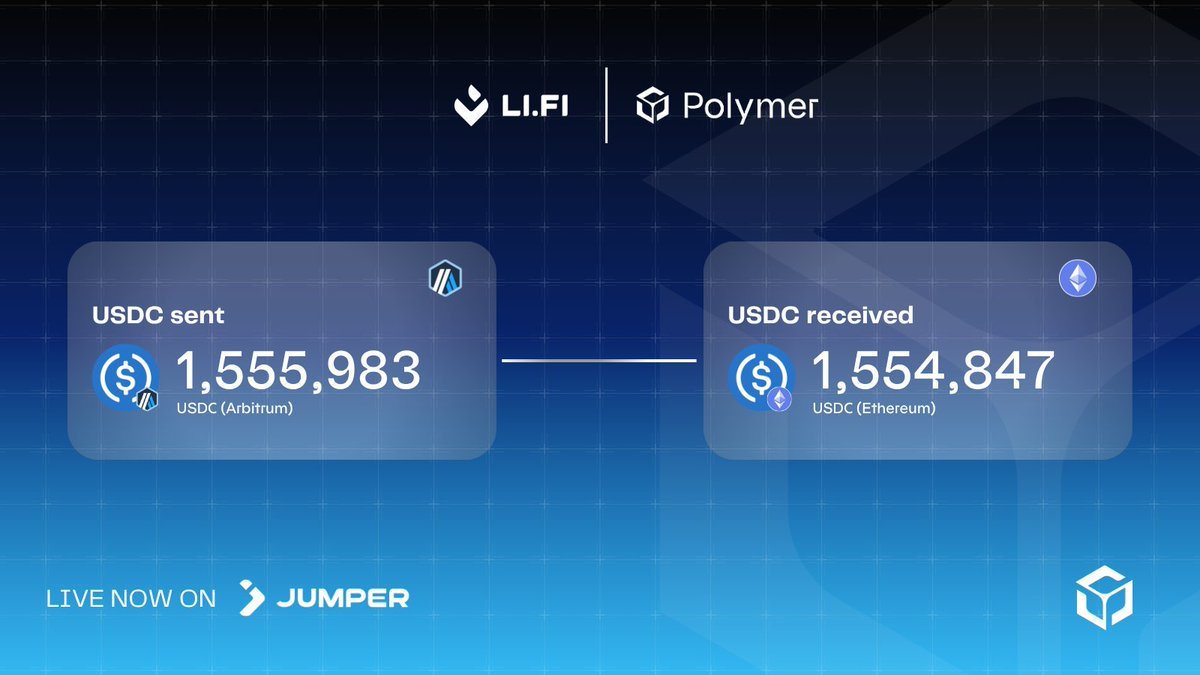
Polymer - Polymer team delivered solid real-world usage for cross chain payment infrastructure. The team showed several large zero-slippage USDC transfers, including a $1.55 million move from Arbitrum to Ethereum in 15 seconds and a ~$1.5 million transfer from Hyperliquid to Ethereum in just 8 seconds. Towards the end of the month, Polymer supported the Pharos Network mainnet launch, providing fast connectivity to over 55 chains in partnership with LI.FI.
Overall, April delivered solid real-world usage and expanding integrations for Polymer's cross-chain payment infrastructure.
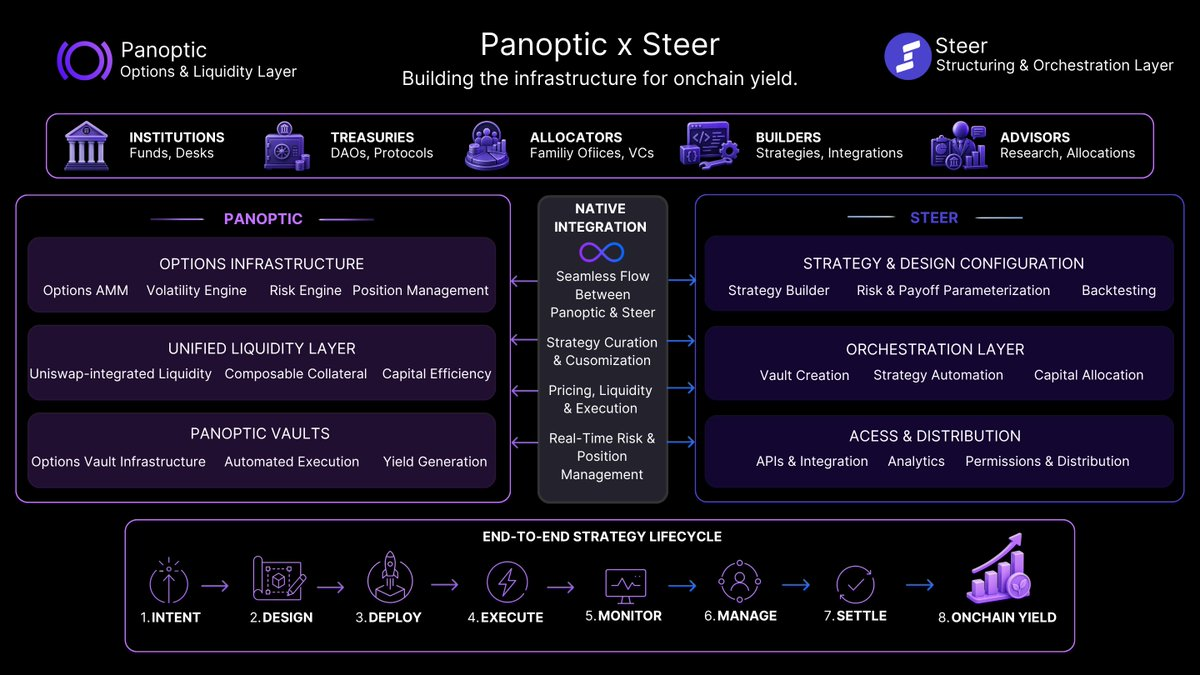
Panoptic - Panoptic had a strategic partnership with Steer Protocol, aimed at integrating Panoptic's onchain perpetual options into Steer's structured yield products. The collaboration focuses on turning market volatility into programmable yield, an important step toward making options a native, composable primitive within broader DeFi yield strategies. Full details on the integration and its implications for liquidity providers are covered in their joint blog post. The Panoptic team also built a V2 trade page from scratch, which now feels like a real trading interface and it’s coming soon.
This kind of meaningful partnership moves Panoptic closer to becoming core DeFi infrastructure built around options. The team has also launched the beta version of its V2, giving users an early look at the upgraded trading experience.

Peaq - This was a milestone-heavy month for Peaq. The network celebrated the TGE of XMAQUINA ($DEUS) and the public beta launch of DeNetPro, two meaningful additions to the Peaq ecosystem. The team also announced new collaborations with IZHC, JunoAgent, and DualMintRWA, each focused on bringing agentic businesses and tokenized machines onchain using peaqOS and Robot Money Agent. These announcements reflect a growing base of core deployments on the network.
The Machine Economy thesis is gaining traction with concrete, live use cases on the Peaq network.
Light Protocol - The team kept busy on the development side, pushing consistent commits to their ZK Compression repo throughout the month, with updates as late as April 29. There were no major public releases announcements this month but work continues to focus on making ZK Compression more performant and cost-efficient, a core part of their thesis that high-scale applications on Solana should be affordable to build and use. A quiet but productive month, with strong technical execution happening behind the scenes.
Silencio - The team released new educational content explaining how raffle tickets work within the Silencio ecosystem, helping users better understand the reward mechanics. The team also shared data and commentary on the fast-growing voice AI market and increasing enterprise adoption of voice data for AI training. This shows that there is a real demand side of their core business. Collection of high-quality real-world voice data remained the central operational focus.
Silencio showed steady progress on building out the voice data layer for AI, with continued community education and market positioning.

Teneo - The team closed out Season 0 and moved straight into Season 1, bringing a refreshed rewards structure that gives participants more to work with. A Layer3 quest was launched specifically for Beacon users, making it easier for people to get involved and earn rewards. On the developer side, the website got a solid overhaul, the layout is cleaner, sections are easier to navigate, and it's clearer what Teneo offers for builders. The team also rolled out support for agent commerce standards on X Layer, which opens the door for autonomous agents to transact and operate more freely across the network.
Closing Remarks
While April has been another turbulent month, both in Crypto markets and for Advanced Blockchain AG, we remain focussed on further developing operational and governance/ compliance excellence. We aim to further strengthen our monetisation and financing means, and invite all shareholders and stakeholders to support the company.
Best regards,
Your Advanced Blockchain Team
.svg)

.svg)

